

Cupang Raksasa, The Giant Betta: Betta Anabatoides


 Giant betta ( Betta anabatoides) pada awalnya dibudidayakan di Thailand pada awal tahun 2000 dan mulai diekspor tahun 2003, termasuk Indonesia. Disebut giant karena ukurannya lebih besar daripada jenis cupang lainnya, yaitu 10—12 cm, bahkan bisa mencapai 18 cm. Giant Betta merupakan hasil seleksi yang ketat jenis cupang yang memiliki sifat suka makan dan pertumbuhan cepat yaitu jenis cupang alam dan plakat. Setelah melalui serangkaian pemuliaan, sekaran telah dihasilkan cupang raksasa yang agresif, memiliki bentuk ekor plakat, halfmoon dan serit. Warna dasar tubuhnya pun beragam antara lain merah, hijau merah, maskot, hijau solid dan red gold.
Cupang Alam, The Wild Betta: The Original Taste

Sifat Biologis Ikan Cupang

Cupang, seperti kebanyakan ikan lainnya, memiliki lendir yang dapat membantu menghambat gangguan penyakit seperti jamur dan bakteri yang menyerang tubuhnya. Seperti halnya ikan lele dan betok, cupang mempunyai alat pernapasan tambahan berupa labirin untuk mengambil oksigen langsung dari udara sehingga ikan ini dapat bertahan hidup pada kondisi air dengan kandungan oksigen terbatas. Sampai sekarang, cupang telah tersebar ke berbagai seluruh penjuru tanah air seperti pulau Jawa, Sumatera, Kalimantan, hingga Papua.
Cupang Halfmoon: Bisa Jadi Fullmoon?

Cupang Serit (Crown Tail Betta): Cupang Mahal Nan Cantik Jelita

Cupang serit bisa dibilang hasil kreasi hobiis cupang Indonesia. Setelah beberapa kali perkawinan dari persilangan indukan cupang impr Thailand oleh hobbis di Jakarta akhirnya terciptalah cupang serit yang pertama.
Pada persilangan selanjutnya, cupang serit mengalami perkembangan pada siripnya terutama pada sirip ekor. Serit pada ekor ini bisa mencapai 16 buah atau bahkan lebih. Selanjutnya muncul kategor serit silang (king crown tail).
Disebut serit silang karena serit ekor silang-menyilang dan melengkung mirip mahkota. Untuk mendapatkan keturunan serit silang, indukan yang digunakan adalah indukan yang mempunyai serit silang, baik jantan maupun betina. Pada dasarnya, yang paling utama adalah induk betina karena induk betina ini membawa gen yang lebih kuat.
Perkawinana indukan ini belum tentu langsung menghasilkan serit silang. Baru pada turunan kedua keturunan serit silang muncul, itupun hanya sekitar 25% dari keseluruhan anakan. Karena serit silang tergolong sulit diproduksi secara kontinyu, harganya melonjak hingga jutaan rupiah per ekor.
Cupang Plakat, The Siamese Fighter Betta: Ganas, Tapi Tetap Cantik

Berbeda dari ikan cupang hias lainnya, cupang plakat memiliki ekor pendek. Walaupun merupakan keturunan cupang adu, cupang plakat tidak menonjolkan kekuatan fisik, warna, dan bentuk siripnya. Jadi, mesikipun cupang plakat bisa di adu, para hobiis pada umumnya memeliharanya untuk menikmati keindahan sirip dan warna-warni tubuhnya.
Cupang Cagak, The Double Tail Betta: Bernilai Tinggi
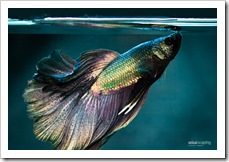
Para pemulia cupang di Indonesia sudah mulai mengembangkan jenis ini, meskipun cagak yang dianggap ideal masih tergolong langka karena tidak setiap perkawinan sesama double tail maupun double tail dengan single tail menghasilkan anakan berekor cagak yang sempuna.
The Crown Tail, A Very Expensive Beautiful Betta Fish

The Wild Betta, The Forest Betta, The Original Beautiful Betta Fish

Usually between 9 - 12cm (3.5 - 4.7in) in length, the Forest Betta can vary widely on physical appearance. Generally the fish is a pale brown to green color with small greenish spots on the body and reddish-brown fins. Pugnax, like all wild bettas, is a short-finned fish, although the males have much longer pelvic fins than the females, and have sharp points on the anal and caudal fins. In addition, males have larger heads than females and will display green gill covers when they reach maturity. These are most commonly noticed when the fish is spawning. Both sexes can display the horizontal stripes and vertical "barring" we associate with Betta splendens.
Since the 1880s, Betta pugnax behavior has been studied with interest by Scientists. In fact, before Betta splendens was so popularized in the West, the Pugnax was one of the most popular of the fighting fish. In fact, its very name, Pugnax, is Latin for "fighting", and although these days we associate the term with its more glamorous and aggressive cousin, Betta splendens, it is still interesting to consider.
Although less popular than Splendens, the Pugnax is considered much easier to keep and breed for the average aquarist. It can tolerate a wide range of pH and a steady temperature of around 70-85° F, and as long as the water is kept clean, well filtered, and with plenty of current, the Forest Betta does very well. It can be kept with other peaceful fish, and unlike Betta splendens, several males and females can happily coexist together, provided the tank is large enough and has adequate hiding places. Any Pugnax tank should be well planted (including floating plants) and tightly covered, as this betta is an Olympic-quality jumper and can easily become a carpet chip if given the opportunity. Pugnax is best kept in an aquarium with subdued lighting so it will display its best colors. Normal stocking rules apply, and the fish requires a minimum tank size of 10 gallons or more.
Betta pugnax isn't a fussy eater, and will happily take chopped earthworms, pellets, live or frozen bloodworms, live or frozen brine shrimp, freeze-dried foods, and even flake if they have been conditioned to accept it. However, as a scourge of mosquitoes this fish is nonpareiled -- the Forest Betta is so adept at consuming mosquito larvae that the species has long found use in mosquito control efforts throughout Asia and beyond. Those aquarists who actively culture mosquito larvae as fish food will find Betta pugnax a willing and enthusiastic customer!
Breeding Betta pugnax is not difficult, provided the fish is well fed and given adequate space and water conditions. They can be aggressive while spawning, so care must be taken that the fish have plenty of hiding places. Once they choose a "territory" in which to spawn, they will guard it ruthlessly. This includes chasing and biting other tank inhabitants who they feel have wandered too close. When a male is receptive to spawning, he will darken in color and his green iridescence will intensify. He will court the female with fins spread, and if she is receptive to his advances her color will fade and she will display three distinct lateral bands.
Reportedly the best breeding results are obtained by housing one male with two females, with the dominant female taking the initiative. The fish spawn at the bottom of the tank with the female releasing eggs with each embrace, wherein the male gathers them into his mouth. Spawning can continue for up to 12 hours, at which time the male will retreat and the female will guard him from other tank inhabitants. If a female continues to be present after spawning, the male may swallow the eggs and spawn again. For this reason it is recommended that the female (or both females) are removed once spawning is complete.
The male will "hold" eggs for around 2 weeks before releasing between 30-60 perfectly independent fry. Once released, the male can be removed and the fry fed with newly hatched baby brine shrimp and microworms. Alternately, it isn't uncommon to find Pugnax fry alive and well in adult tanks, proving that spawns can and do occur in community situations.
Interesting to observe, easily kept and willingly bred, the Forest Betta is an excellent subject for the beginning wild betta keeper. Why not see for yourself? (source: bettysplendens[dot]com)
The Doubletail Betta, Another Beautiful Betta Fish

The DT phenotype is controlled by one gene which, when double-recessive, produces a betta with two tails and a greatly increased dorsal fin. There are likely other factors involved in the appearance of the DT since not all have the same degree of the split in the caudal fin. The gene also seems to be variable in expression, producing some specimens with perfectly-balanced lobes and others with lobes that are dramatically disproportionate to one another. (source: bettysplendens[dot]com)
Siamese Fighting Fish, The Plakat Betta Fish Fighter

People who kept the Betta for fighting developed it from the wild caught Betta, which was smaller, paler in color, and had less stamina. They developed it to be a stylistic fighter with a larger body, more muscle, and darker more splendid colors. It also developed shorter fins, but with a broader caudal peduncle to push the opponent and make him lose control. The most important things to develop are shape, fighting style, size, and jaw...etc. In Thai we call this type of Betta “Plakat Morh.”
Plakat Morh in Thailand nowadays has been crossbred with other lines such as Cambodian, Vietnamese, Malaysian, so now it is difficult to distinguish which one is which. Currently we breed long fin and short fin Betta splendens for export, serious hobbyists, and for show, not just fighting.
People, who keep the Betta as an aquarium pet, developed them for their beauty. Its fins should be long and bright with many colors. The most important things to develop for this Betta are colorful scales, long fins, balance of shape, and multiple colors. In Thai we call “Plakat Cheen” and now branching into Half moon and Crown tail form type.


